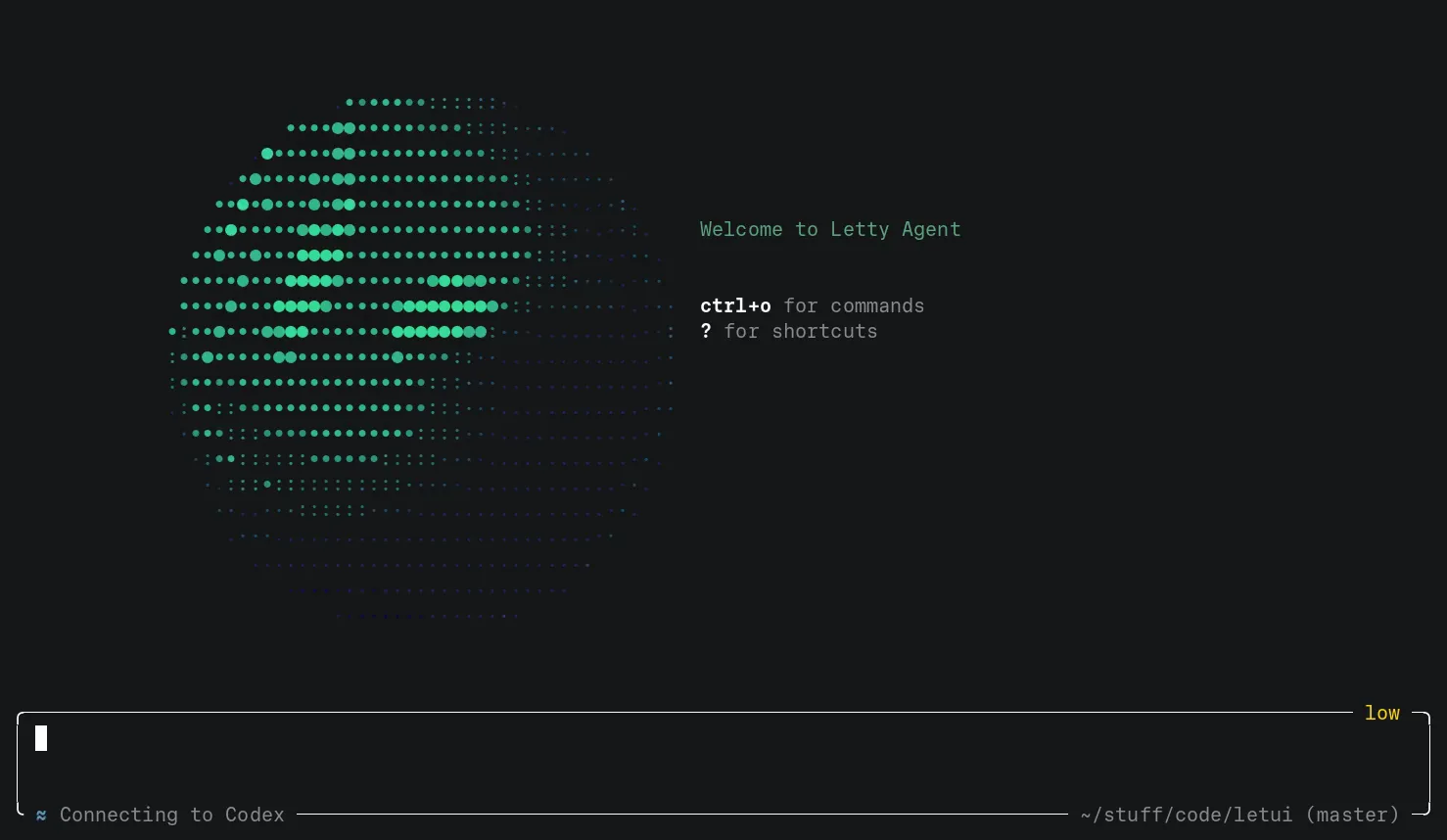
TUI library built from scratch with TypeScript and a Rust core, featuring a component-based API, signal-based state management, CSS-like styling API, a Rust-powered layout and rendering engine, and cell-based diffing.
In-browser MKV video streamer and player built from scratch, featuring real-time 4K anime upscaling powered by WGSL (WebGPU) shaders ported from Anime4K.
Paid music collaborations and song-cover campaigns for artists worldwide. Led frontend and backend development across both products, built the Next.js frontend from scratch, and owned payments, payouts, and mobile audio features. Cut data processing for 1M+ artists from nine days to seven hours and roughly halved Soundcharts costs.
AI mapping platform for satellite and aerial imagery. Built high-performance React interfaces for large imagery datasets, simplified component state and data flow, and helped move users to centralized sign-in with zero downtime.
Social content and analytics platform with shoppable feeds for brands. Led React adoption within an Angular application and improved embedded app performance for e-commerce sites across Europe. Built a custom state manager that cut the JavaScript bundle by 20% and automated package publishing.
hitidedec 2020 - feb 2021
Online clothing brand. Fully automated stock updates with a tested pipeline that transformed Airtable inventory data and stored it in the website's database.
Online sports insurance company for individuals, tournaments, etc. Built payment and subscription workflows and internal support tools, redesigned the PostgreSQL schema, and consolidated two backends into one codebase.
Part 4 ended with paint taking 81% of frame time. Obvious fix: move paint to Rust.
The paint migration
In TypeScript, I was calling setCell() for every character — updating a typed array through Bun's FFI. Each call had overhead:
typescript
// Before - setCell per character
for (let x = frame.x; x < frame.x + frame.width; x++) {
  for (let y = frame.y; y < frame.y + frame.height; y++) {
    setCell(x, y, char, fg, bg);
  }
}
In Rust, direct buffer writes. No FFI boundary per cell:
rust
let idx = (w * y + x) as usize * 3;
buf[idx] = char as u64;
buf[idx + 1] = fg;  // raw hex, no conversion
buf[idx + 2] = bg;
hex_to_color() conversion only happens at flush time when crossterm needs it. During paint, just integer writes.
The interaction state problem
Here's where it got interesting. My components had isFocused and isPressed props for styling:
Option 1: Keep state in TS, pass as node props every frame. But then TS needs layout rects for hit-testing, or Rust sends them back. FFI round-trip. Latency. Duplication.
Option 2: Move interaction state to Rust. I went with option 2.
Rust owns interaction state
The insight: isFocused and isPressed are view state, not app state. They belong with the renderer.
Rust picks the right variant based on InteractionState.
Merging layout and paint
Originally two FFI calls: calculate_layout() then paint(). Both built the same Taffy tree. Wasteful.
Now there's just paint(). It parses node data, builds the Taffy tree once, computes layout, stores frames for TS to read, then paints. One tree, one pass.
paint_taffy_node() walks the tree recursively, calling taffy.layout(node_id) for position and taffy.get_node_context(node_id) for paint data.
The text positioning bug
Text was rendering wrong: [ ld hello wor ] instead of [ hello world ]. Two issues:
Issue 1: Using layout.location instead of content box. Location is the outer box — includes border and padding. Fix:
rust
let content_x = abs_x + layout.content_box_x();
let content_y = abs_y + layout.content_box_y();
draw_text_at(content_x, content_y, content, fg, bg, tw, th);
Issue 2: Character count vs byte count. TypeScript sent [...text].length (character count), Rust used it to slice UTF-8 bytes. For ASCII they match, but offset accumulation was wrong. Fix:
typescript
const textLength = new TextEncoder().encode(textContent).length;
What's next
Still measuring, but early results look promising. Paint in Rust eliminates thousands of FFI calls per frame. Next up: proper text input handling and controlled vs uncontrolled inputs.
Part 6
Stabilization and release pain
Title was: Building a TUI Library from scratch: Part 6
Description was: Stabilizing Rust paint, fixing lifecycle issues, and shipping through v0.0.10/v0.0.11 pain
Originally posted Feb 14, 2026
Things I learned:
Fast code can still feel bad if lifecycle state is wrong
Benchmark setup matters as much as optimizations
Releases expose bugs local dev hides
Part 5 ended with paint/layout in Rust. Performance looked great. Then I hit the less fun part: stability and release workflow.
Responsiveness regression
Responsiveness degraded after resize/reinit. Root cause: freed buffers but forgot to reset first-diff state.
Removed unnecessary buffer locks in Rust paint. Before, each helper locked the buffer internally. After, paint() takes one lock and passes &mut [u64] down.
Fixed benchmark wrappers for OpenTUI and pi-mono — I was measuring at the wrong point for their render scheduling. Switched to measuring after scheduled completion (setTimeout(0) in adapters).
After this pass, sample metrics: 0.5ms avg, ~`1900fps` in that scene.
Research before next optimization
Once paint was stable, text path became the obvious target. Wrote TEXT_SERIALIZATION_OPTIMIZATIONS.md to map waste before coding changes.
Main findings:
TS encoded text twice in serialize flow
Rust allocated/cloned strings per text node each frame
Work scaled with total text, not changed text
Also added a small stress script for raw terminal writes as calibration.
Repo refactor + release cycle
Big structure cleanup before release:
runtime code → src/
examples → examples/
cleaned up exports in index.ts
older implementation → legacy/
Shipped v0.0.10, immediately hit publish/package issues. Fixed those, then hit another: logger could crash in some environments. Safe fallback:
Part 5 was raw speed. Part 6 was making it usable and shippable:
cleaner locking model in Rust paint
corrected benchmark methodology
cleaned project structure
painful but useful release fixes
concrete plan for text diff sync
Part 7 is where text/style sync architecture changes for real.
Part 7
Text diffs, style registry, and real demos
Title was: Building a TUI Library from scratch: Part 7
Description was: Text/style diff sync architecture, wrapping fixes, and docs+demos built on top
Originally posted Feb 21, 2026
Things I learned:
Sending less over FFI usually beats micro-optimizing local code
Smaller protocols need stricter validation or they fail in weird ways
If demos are painful to build, the architecture still has problems
After v0.0.11, one focus: stop sending all text every frame. This part is mostly that migration plus style sync changes.
Cleanup before migration
Quick cleanup first:
proper terminal deinit (disable_raw_mode + leave alt screen)
quit-path cleanup
safer flush paths for zero-size terminals
Also fixed p99 calculation in metrics — interpolation instead of rough indexing:
typescript
function percentile(sorted: number[], p: number): number {
  const rank = p * (sorted.length - 1);
  const lower = Math.floor(rank);
  const upper = Math.ceil(rank);
  if (lower === upper) return sorted[lower]!;
  return sorted[lower]! + (sorted[upper]! - sorted[lower]!) * (rank - lower);
}
Made comparison across runs more trustworthy.
Text registry migration
Old flow: TS serialized full textData, paint() received full text payload every frame.
New flow:
Rust keeps TEXT_REGISTRY: HashMap<u32, String> keyed by node id
TS computes text diffs (upsert/delete) per frame
text diffs sync separately
paint() reads text from registry
First implementation used per-node FFI calls (upsert_text/delete_text). Worked, but too many calls. Switched to batched ops — one sync_text_ops call per frame:
op (u8), node_id (u32 LE), text_len (u32 LE), text bytes for upserts
Rust applies all ops under one registry lock.
rust
match op {
    TEXT_OP_UPSERT => registry.insert(node_id, text),
    TEXT_OP_DELETE => registry.remove(&node_id),
    _ => return 0,
}
Main result: text transfer scales with changed nodes, not total text.
Metrics during transition
Some snapshots got worse before better (~0.9ms avg vs older ~0.5ms). Expected — extra JS work to build ops payload plus several architectural changes landing in the same window. Later snapshots: ~0.7ms avg. Not a straight line, but direction was correct.
Short test-driver experiment
Added a Unix socket test driver (ping, sleep, key, mouse, focused, snapshot, quit) to script interactions. Useful for quick black-box checks, but later removed during cleanup.
Style sync architecture rewrite
Next bottleneck: style payload duplication. Before, each node carried full style payload inline in serialized node data. After:
node payload shrank to 4 fields (nodeType, childCount, nodeId, styleId)
style moved to Rust-side STYLE_REGISTRY
TS computes style snapshots and sends diffs via sync_style_ops
This introduced explicit schema files (style_schema.rs, src/style-schema.ts) and unlocked broader style support:
margin, rowGap, columnGap
flexShrink, flexBasis
justifyContent, alignItems, alignSelf
min/max width/height
overflow, overflowX, overflowY
Wrapping and clipping fixes
Fixed text wrapping and clipping in Rust. Problems: naive text measurement for wrapping/newlines, draw path not clipping correctly in nested overflow scenarios.
Key changes:
wrapped text measurement in Rust (measure_wrapped_text)
draw/cursor functions aware of content box width/height
clip-rect propagation down the tree with overflow-aware intersection
Improved: long text behavior, input cursor placement in wrapped content, nested container clipping correctness.